Bernardo Kastrup is a philosopher and computer scientist who has developed a perspective called analytical idealism. Born in 1974, he holds two PhDs—one in computer engineering and another in philosophy—and serves as Executive Director of the Essentia Foundation. He worked at CERN before shifting his focus to metaphysics and consciousness studies.
Origins and Journey Towards Analytical Idealism
Kastrup's journey began when working on artificial neural networks at CERN led him to ponder what it would take for an artificial system to be truly conscious, rather than just intelligent. After years of grappling with this, he realized the underlying assumption that consciousness arises from physical arrangements was flawed - a "category mistake."
This realization broke him free from physicalism - the idea that the external world is non-mental or physical stuff. Instead, he came to view the external world as inherently mental, composed of mental states outside any individual mind.
"After a few years um sort of banging my head against that question I realized that the question is wrong it's like asking what is the marital status of the number five it's a category mistake...the notion that there is an external World which there is it's obvious an external World beyond our individual Minds that does not entail or imply that such an external world is non-mental...the idea was the world is made of mental States they are not my mental States or your mental States they are out there but they are mental still so there is something it is like to be the world out there it is a universal mind if you will"
AI vs Consciousness
Kastrup draws a clear distinction between intelligence and consciousness in AI systems:
"Intelligence has to do with processing data in a clever way to perform certain functions. Consciousness has to do with there being something it is like to process that data, there is subjectivity attached to the data processing in some way." "the emergence of artificial intelligence does not entail or imply the emergence of artificial individual consciousness" "Silicon computers will never be conscious of their own private inner life."
He argues that while AI can display intelligence in data processing, silicon computers "will never be conscious of their own private inner life." Consciousness requires an intrinsic subjectivity that cannot be objectively measured.
iai.tv/bernardo-kastrup-the-lunacy-of-machine-consciousness
The Illusion of AI Understanding (2024 Update)
Kastrup has expanded his critique of AI consciousness claims with a more detailed technical argument. He argues that Large Language Models (LLMs) like ChatGPT have no understanding whatsoever—they merely transform "squiggles" based on statistical regularities:
"From the point of view of the LLM, the text database used during training contains merely a gigantic collection of signs. These signs happen to be English words—or some parts of words—but they might as well be squiggles; it doesn't matter, for the LLM is not aware of the meaning of the words (or of anything else, for that matter)."
The key insight is that all meaning in AI outputs comes from humans—both in the training data and in interpretation:
"The understanding involved here is thus always human understanding, as embedded in both the training database and the minds of the people who contemplate the outputs of the AI. The latter simply rearranges—'transforms'—meaningless squiggles. All meaning is imparted and projected on the squiggles by us humans."
Kastrup warns this creates a dangerous illusion that will only intensify as AI systems grow larger:
"The illusion of artificial understanding and creativity, already so compelling, will become irresistible for the vast majority of people. This is a great danger, for we risk losing sight of our own value and dignity by projecting all of it onto electronic mechanisms. This is a form of 'kenosis,' an emptying out of ourselves, wholly unjustified by the facts."
He concludes that "Artificial Intelligence ultimately is human intelligence"—AI amplifies the reach of human productivity but doesn't replace it.
bernardokastrup.com/the-illusion-of-ai-understanding
Analytical Idealism
According to Kastrup, analytical idealism proposes:
"All states in nature are mental and that what we call matter or physical stuff is a cognitive representation of external mental states...everything is inherently mental so it should come as no surprise that the phenomenon has mental characteristics and physical ones because that's how we represent external mental characteristics."
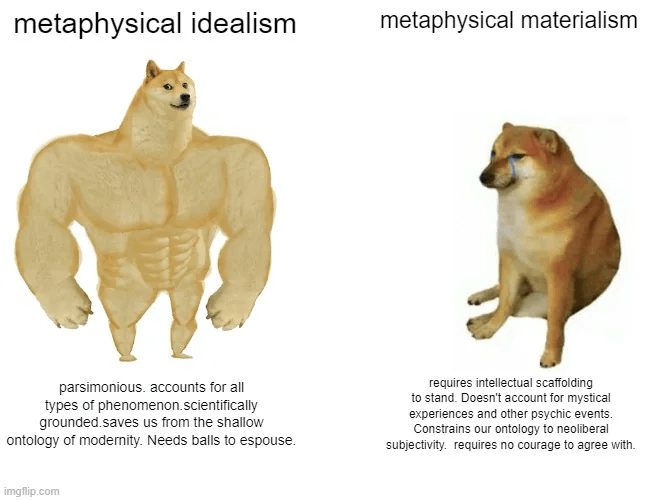
"Philosophically, analytical idealism is the notion that there is an external world, it's beyond our individual minds, but it too is mental. It is made of experiential or mental states. It is a big mind, a mind out there that presents itself to us...as the inanimate universe, just as my own thoughts and emotions present themselves...as the matter that constitutes my body."
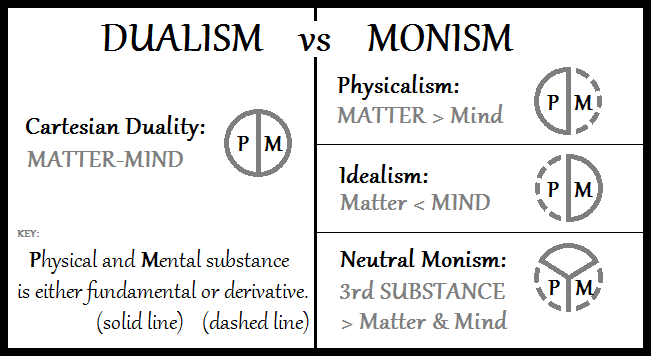
So the external world beyond our minds is itself composed of experiential mental states, presenting as the physical universe to our perception. Kastrup argues this is "extremely consistent with all evidence" since "physical states only arise upon measurement because they are a representation of the result of that measurement."
Relation to Donald Hoffman
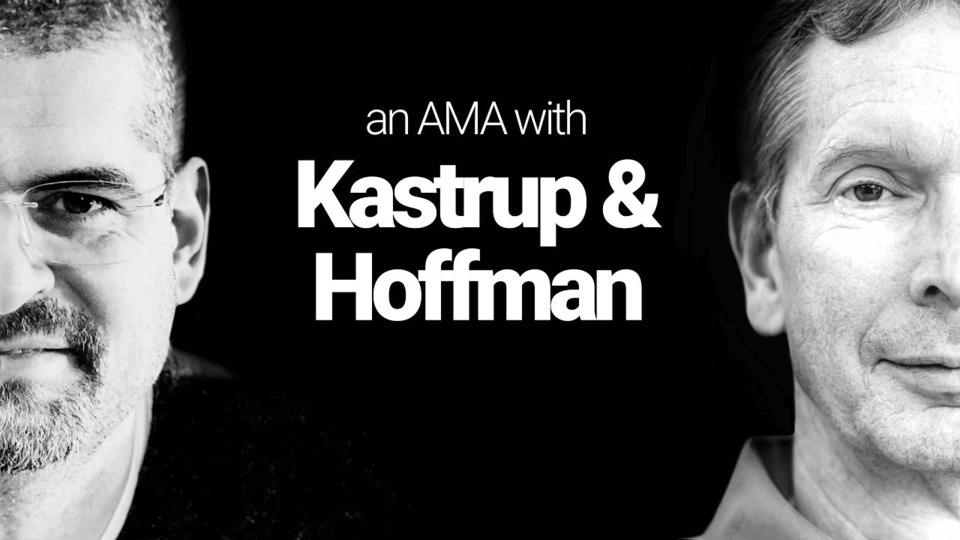
Kastrup sees his ideas as highly compatible with Donald Hoffman's perspectives. Hoffman posits that nature arises from interactions between conscious agents, with the physical world being cognitive representations within those agents.
"I dovetail extremely well with Don. Don says nature is an interplay of conscious agents, and what we call the physical world are cognitive representations in those conscious agents. In other words, there is nothing but mental states out there, and there are these different agents that interact with one another... where analytic idealism makes one step further... analytic idealism would to go further and say the conscious agents are themselves reducible to one field of subjectivity."
Kastrup builds on this by proposing that the conscious agents themselves are reducible to "one field of subjectivity" - a unitary universal mind that grounds all existence.
Dreams vs Reality

While individual dream states originate from one's own mind, Kastrup suggests the reality we experience arises from "the mental activity of something else that we have no control over" - a greater universal mind.
"When you dream at night, the dream is in you, it's your individual mind that's generating the dream... But in the case of reality, this dream around us is not ours. We are inserted in the mental activity of something else that we have no control over, and this bigger mind within which we are inserted... it always does what it does because it is what it is, it doesn't have to react to external challenges and opportunities, it just expresses itself regularly and spontaneously, and therefore the laws of physics are very regular and predictable because they are representations in the screen of perception of the internal mental dynamics of this mind that surrounds us."
This mind expresses itself spontaneously and regularly, which is why the laws of physics appear so consistent, as they represent the internal dynamics of this overarching mind.
Hacking Reality
Kastrup speculates that an advanced civilization that survives long enough would come to understand reality's mental nature and find ways to "hack" it, circumventing perceived physical limitations which would "become a game, not something that rules your life."
"An advanced civilization on Earth, if it survived long enough, would have understood that reality is mental and would have figured out ways to hack it, just like we will do. Imagine where we will be 500 years from now...you realize that we too, in 500 years, probably will be able to hack the mind of Nature. And then physical law, physical limitations will have much lesser meaning. It will become a game, not something that rules your life."
Perhaps evidence of such mental hacking by previous civilizations could explain current anomalies.
Embracing Mystery
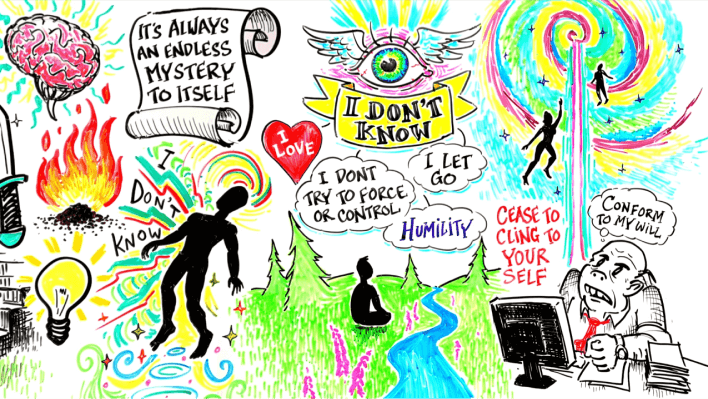
According to Kastrup, believing we have complete understanding gave a sense of "getting one up on the universe" even if we could not escape death. But he argues:
"We are going through a phase now in which we are being confronted with the fact that we do not actually have closure, and this is painful because we have to fluidly compensate again. Which way? Well, back to mystery. It's the only way."
He views this as
"unique in history because it's the first time that there is to be transiting back to mystery, having denied mystery for one and a half centuries."
Kastrup observes a growing shift in philosophy and neuroscience away from physicalism and towards acknowledging an underlying mystery to reality that cannot be fully explained by physical models alone.
"We are clearly on the cusp of a shift that is already happening, in terms of our understanding of nature, from a metaphysical perspective. Already today, the mainstream position in philosophy of mind is that mental states are not reducible to physical states...physicalism, in philosophy of mind, is no longer really mainstream..."
He sees this reembracing of mystery after centuries of rejecting it as a pivotal and unprecedented transition in humanity's worldview, likely converging towards some form of objective idealism as an alternative metaphysics.
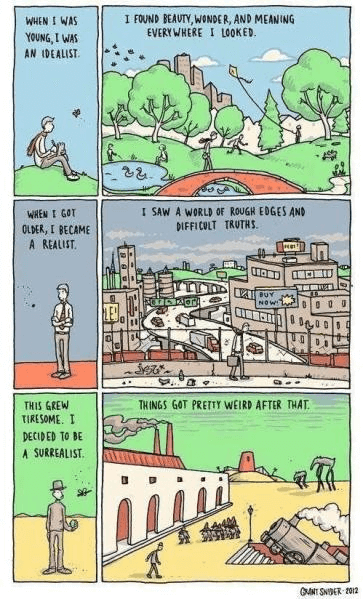
"The big transition now, and it's unique in history, because the first time there, there to be transiting back to mystery, having denied mystery for one and a half centuries. That is unique."
Memory and the Subconscious
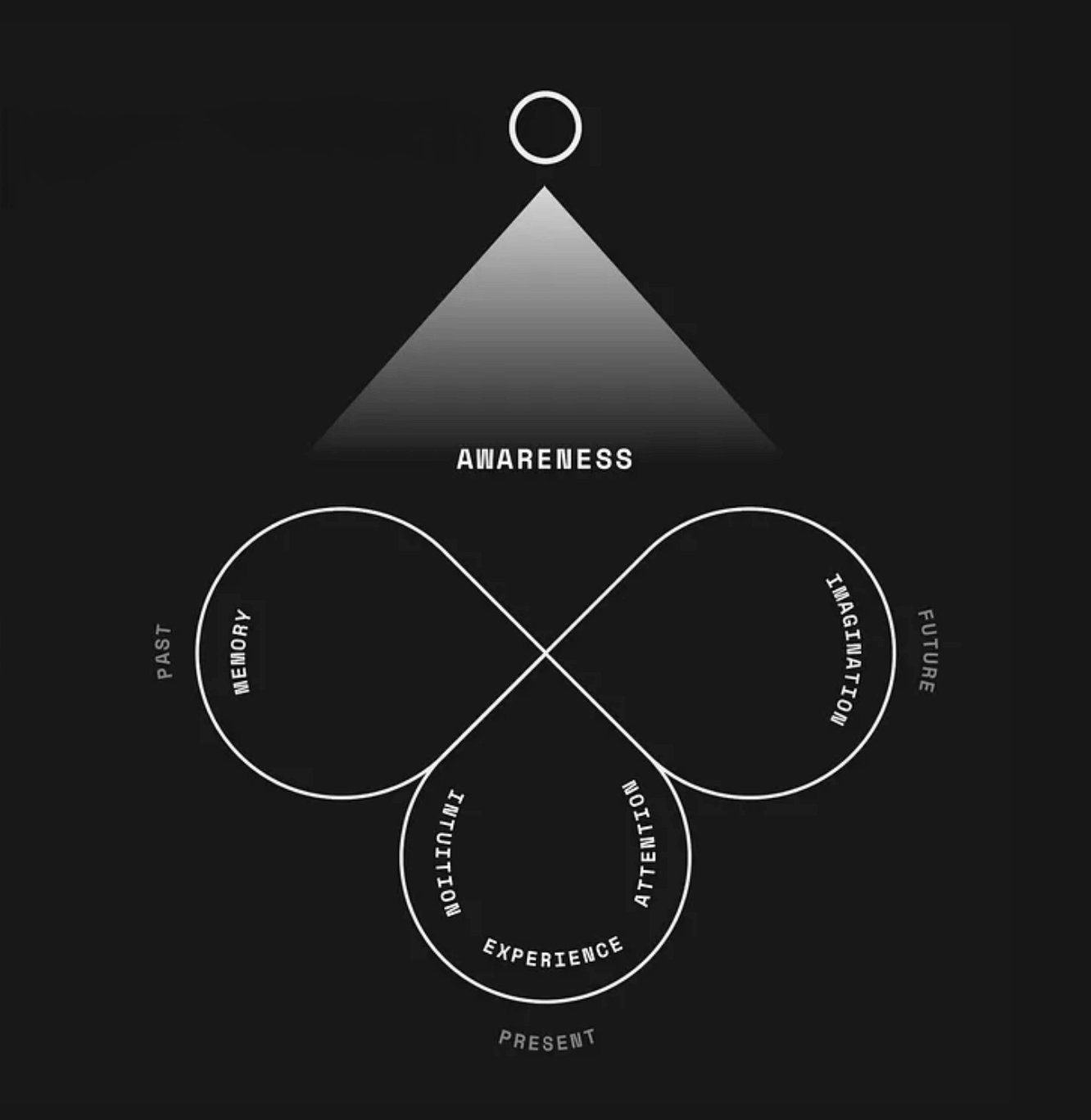
According to Kastrup, there are memories that we cannot consciously access but still inform our behaviors, emotions, and reactions. These include childhood traumas that we may not remember but still shape our fears, relationships, and how we perceive the world.
"There is something we know that we don't remember and if we remember that we would go like oh of course I reacted the way I did...So there is a memory there that informs our behavior but cannot be accessed metacognitively, we cannot access that memory introspectively, but it is there, in the body, informing how we behave just like so many other memories do."
"Your childhood traumas that you don't remember they inform the way you react to things, how you feel about things, what you're afraid of, what you're not, who you fall in love with, who you don't. These are all behaviors triggered by memories that we can no longer access introspectively."
Even seemingly irrational annoyances or reactions can be traced back to such subconscious memories deeply ingrained within our minds.
The Arbitrary Nature of Logic
Kastrup argues that logic itself is based on arbitrary axioms or assumptions that cannot be logically proven without circular reasoning. Aristotelian logic, with its laws like the law of excluded middle, is not the only logic system that exists. Other logics like intuitionistic logic challenge certain axioms.
"Logic is an arbitrary set of assumptions, of axioms. You cannot logically defend the validity of logic without circular reasoning...Logic is arbitrary. We adopt it unconditionally because the axioms of logic seem self-evident to us."
"If you believe in the law of excluded middle, then things are either true or false. They cannot be neither, and they cannot be both. So you can prove that something exists by proving that it cannot not exist...just because you abstractly proved that they cannot not exist, you've proven that something you've never seen, that you can't even conceive an example of, exists. This doesn't seem to be valid, right?"
"Nature doesn't give a damn that logic seems self-evident to us. Nature is what it is, doesn't care what we think is logical or not. Nature does what it does irrespective of us."
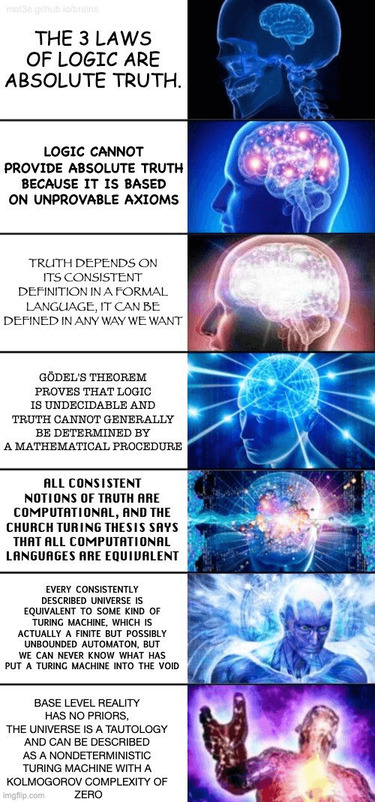
Kastrup contends that while logic seems to work well in most cases empirically, nature itself is not bound by human logical constructs. There are phenomena that defy our understanding of logic, which he refers to as "high strangeness phenomena." The implication is that we should remain open-minded and willing to question our assumptions when confronted with aspects of nature that do not align with our current logic systems.
Here is how anyone can understand the true nature of reality - bernardo kastrup
Possibility of Ancient Civilizations
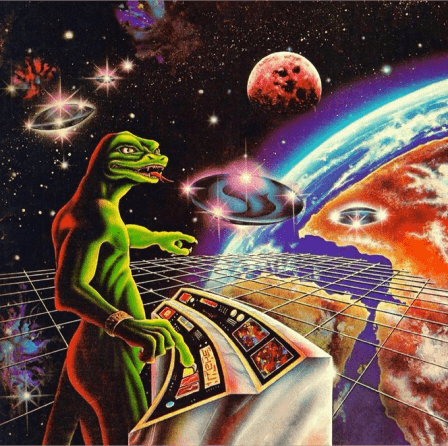
Kastrup discusses the idea that there could have been intelligent civilizations on Earth millions of years ago that have left no trace due to the recycling of the Earth's crust over time. The ocean crust is entirely recycled every 100-150 million years, and even the continental crust is slowly recycled.
"Whatever happened on this planet's crust in the oceans less, more than 150 million years ago, is not there to be seen. It has been reforged in the cauldron of magma under our feet." "It is entirely plausible and consistent with the evidence that we do have, that there could have been other animal species, uh, on this planet...that have evolved, uh, to become intelligent, to develop a civilization, to develop technology, and then died because of any of the myriad things that can put an end to any civilization." "In 30,000 years, you can have the birth of intelligence, the full development of a technological civilization that goes to space, its end, and then no traces being left behind after 150 million years."
This "Silurian Hypothesis" suggests that advanced aquatic or industrial civilizations could have existed, developed technology, and then been wiped out by events like solar storms, asteroid impacts, or climate changes, leaving no archaeological evidence behind after millions of years of the crust being recycled.
He argues that given the vast timescales involved and the relatively short time it took for human intelligence and civilization to emerge, it is plausible that such advanced civilizations arose and disappeared multiple times over Earth's 4.5 billion-year history, leaving no discernible traces for us to find.
Transcendence and the Need for Meaning
Kastrup explores humanity's historical relationship with transcendence, mystery, and the unknown. Traditionally, religious and spiritual traditions provided a sense of meaning by situating humanity within a greater, transcendent mystery beyond our full comprehension.
"Transcendence was a source of meaning, the notion that you are embedded in a great mystery, that there is a higher purpose that is not accessible to us provides great meaning."
Kastrup argues that this drive for closure and the belief that we understand the universe stems from a deep psychological need for meaning when transcendent sources are lost. It represents an attempt to "one-up" the universe and find solace in the illusion of complete understanding, even if we cannot escape mortality.
However, he says in the 19th century
"we didn't really believe that anymore. We lost that source of meaning because we lost transcendence, so we needed to fluidly compensate. What is another source of meaning? It's closure."
Physicalism Is a "Dead Man Walking" (2025)
In 2025, Kastrup made his strongest declaration yet about the collapse of physicalism—the worldview that matter is fundamental and consciousness emerges from it:
"If you ask me, I think that's happening again. 200 years later, it's happening again. Physicalism is a dead man walking."
He draws a parallel to the late 19th/early 20th century shift toward physicalism, noting that thinkers like Nietzsche recognized its significance decades before others:
"The smart people of the time understood the significance of it. Nietzsche understood the significance of it, and he wrote about it 50 years before anybody else truly grasped the significance of what happened."
His timeline for this paradigm shift is surprisingly near-term:
"There is only so far cultural reflexes and prejudice can deter the power of reason and evidence... I think we are seeing that right now, in the 2020s and certainly into the 2030s."
The Political Origins of Physicalism
Kastrup has also revealed that physicalism was never primarily a scientific conclusion—it was a political weapon. Citing historian Will Durant, he notes that Denis Diderot, a founder of the Enlightenment, openly acknowledged:
"Materialism is a good weapon against the Church, and must be used till a better one is found."
The early scientists adopted physicalism to avoid being "burned at the stake" like Giordano Bruno was in 1600. By carving out a metaphysical domain outside "spirit" (psyche/mind), they could operate without ecclesiastical interference. The original clarity that this was a political convenience—not a plausible metaphysics—was lost by the late 19th century.
UAPs and Non-Human Intelligence (2024)
Kastrup has developed a detailed hypothesis about Unidentified Aerial Phenomena (UAPs) and Non-Human Intelligence (NHI), arguing that the most reasonable explanation is terrestrial, not extraterrestrial.
Two Distinct Phenomena
He distinguishes between two classes of UAP observations:
-
"Nuts-and-bolts" UAPs: Physical craft that can be filmed, tracked by radar, and (allegedly) stored in hangars. These appear frequently near military and nuclear installations, suggesting interest in monitoring human activity that could compromise planetary habitability.
-
"High strangeness" events: Elusive, dream-like encounters (contactee/abduction cases) that produce synchronistic rather than causal evidence. These communicate through archetypal, symbolic imagery and seem aimed at conveying metaphorical teachings.
Kastrup believes conflating these two phenomena makes it impossible to account for either.
The Terrestrial NHI Hypothesis
Drawing on the Silurian Hypothesis (Schmidt & Frank, 2018), Kastrup argues that ancient terrestrial civilizations could have developed technology far beyond ours over Earth's 4.5 billion year history:
"There is, thus, plenty of time and opportunity for other non-human species to have arisen on Earth, developed to a level of technology far beyond ours... and then to have effectively vanished due to one or more of the myriad possible civilisation-ending cataclysms."
Fossil hydrocarbons were available as early as the Carboniferous period (350 million years ago), providing a window of hundreds of millions of years for multiple industrial NHI civilizations to rise and fall.
The pattern of UAP behavior supports this view. Dr. Jacques Vallée estimated about three million UAP landings in just twenty years—far more than needed for extraterrestrial surveying, but consistent with beings "simply going about their business" because they are from here.
The Mind-Matter Boundary
Crucially, Kastrup notes that UAPs don't respect the boundaries we draw between physical and psychological effects:
"The phenomenon does not seem to make any distinction between physical and psychological effects; it produces both, as if they were mere facets of one and the same causative mechanisms."
This aligns perfectly with analytical idealism's view that the physical-mental distinction is itself an artifact of perception, not fundamental reality.
bernardokastrup.com/uaps-and-non-human-intelligence
The Dissociation Model Refined
Kastrup has further developed his central metaphor: we are dissociated alters of a universal mind, much like the multiple personalities in Dissociative Identity Disorder (DID).
The Dashboard Analogy
Physical matter is like a pilot's dashboard—a simplified representation of deeper processes, not the fundamental reality:
"What we call the 'physical world' is just a dashboard representation of deeper mental processes. Our senses—eyes, ears, skin, nose, tongue—are like the airplane's sensors, detecting certain patterns of reality. But what they detect isn't 'matter' in the strictest sense. Instead, it's transpersonal mental activity, which our minds interpret as the physical world."
Psychedelics and Boundary Dissolution
Psychedelics don't increase brain activity chaotically—they reduce the constraints that keep our thoughts separate:
"Kastrup argues that this happens because psychedelics temporarily reduce dissociation. Just like the blind alter in the DID study regained vision when dissociation was lowered, people who take psychedelics may temporarily reconnect with the broader field of consciousness."
A striking 2015 study showed a woman with DID whose different alters had different levels of vision—some were "blind" despite healthy eyes. When dissociation was lowered, vision returned. This supports Kastrup's model that our apparent separation from universal consciousness is a function of dissociation, not fundamental isolation.
Death as Reintegration
"When an alter in a DID patient fades, its memories, thoughts, and feelings don't 'vanish'—they reintegrate into the whole. In the same way, when we die, our individual consciousness dissolves back into the larger field of subjectivity."
Death, then, is not annihilation but a return to the true nature of reality—the end of dissociation.